Every November, as snow begins to fall, the Latvian resort town of Jūrmala, located along the chilly Baltic Sea, transforms into a warm hub of Jewish life and learning. On one Friday morning after school, Jewish families pack up excited children and head to the three-day Gibush Conference, known in Latvia as “the main Jewish event of the year.” Parents are excited to reconnect with friends, attend workshops, and relax in the spa while their kids participate in exciting Jewish-themed programs.
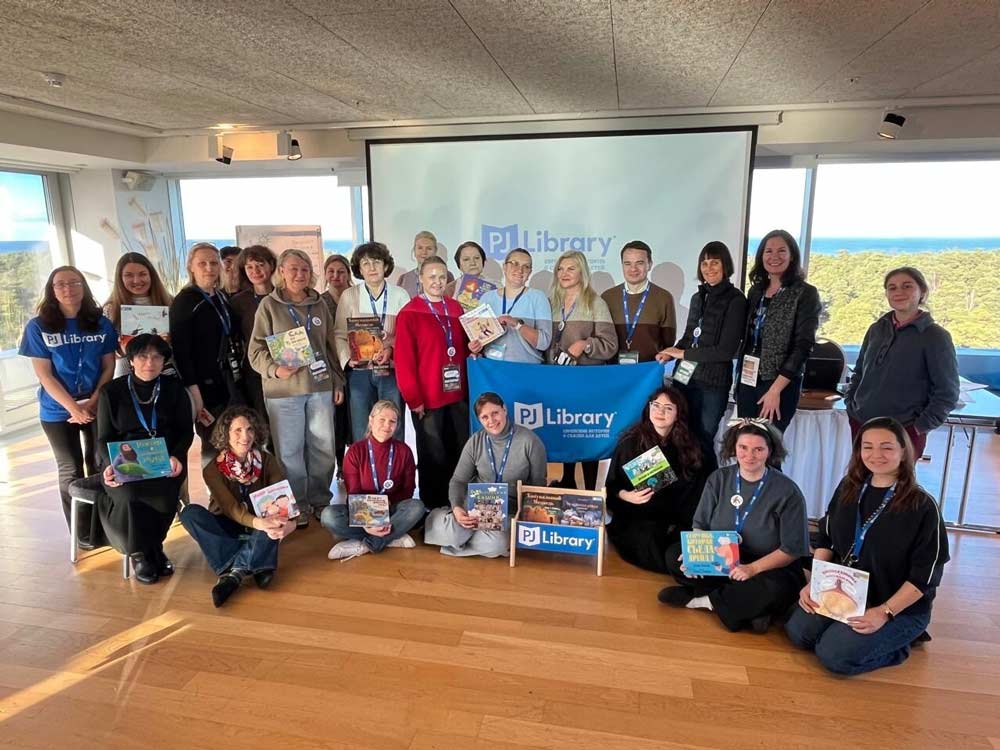
Gibush, which focuses primarily on building Latvian Jewish community, made history this year with its first-ever PJ Library track geared toward Russian-speaking educators. With support from the organization Jewish Community of Latvia, 28 teachers from Latvia, Estonia, Lithuania, Russia, Israel, Germany, and the United Kingdom attended the seminar to learn how to use PJ Library books in their classrooms and in their communities.
Latvia, like much of Eastern Europe, has a complex Jewish history. Before World War I, there were 33,651 Jews living in Riga, about seven percent of the city’s total population. After the war came a brief “golden age” when philosophy, art and culture thrived and Riga became home to half the Jewish population in the country. World War II brought immense destruction. In the more than 40 years of Soviet communism that followed the war, all religious activity, including Judaism, was actively suppressed.
Today, PJ Library plays a vital role in rebuilding Jewish life. Lively Jewish-themed stories capture a child’s imagination while content-rich book-flaps give parents and teachers options for Jewish learning and practice. For a community, just one generation shy of Communism, this is nothing short of a miracle!
With this history in mind, I visited Riga, Latvia’s capital, the day before the Gibush Conference began, and spent time in the city’s three Jewish schools: Dubnov, a public Jewish elementary and high school; Motek, a private Jewish preschool and kindergarten; and the local Chabad school. At all three schools, I could see the powerful impact PJ Library is having.
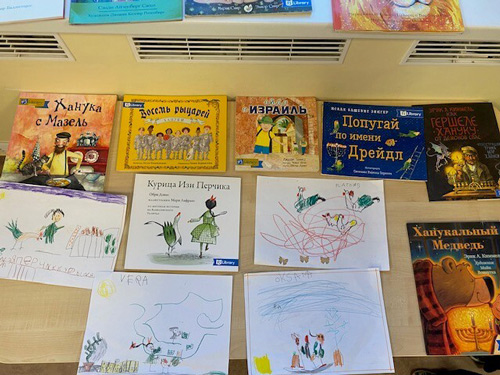
More than 350 children receive PJ Library books at home, and each school proudly features PJ Library books in its library, in cozy classroom reading corners, and in multiple displays throughout its building, including displays of books for different holidays lining the hallways. These books are read daily and used by teachers to inspire artwork and theatrical productions.

At Motek, I joined a preschool class for an interactive reading of Shalom Bayit: A Peaceful Home. At the Chabad school, children eagerly ran up to show me their favorite PJ Library books. And at Dubnov, one teacher told me, “Thanks to PJ Library, with its colorful illustrations and relatable stories, our kids love to read!”
Considering the Jewish history of the country, it was especially moving to be in a Jewish school in Riga and see children smile as they listened to a story about a small group of animals feeling safe in their homes.
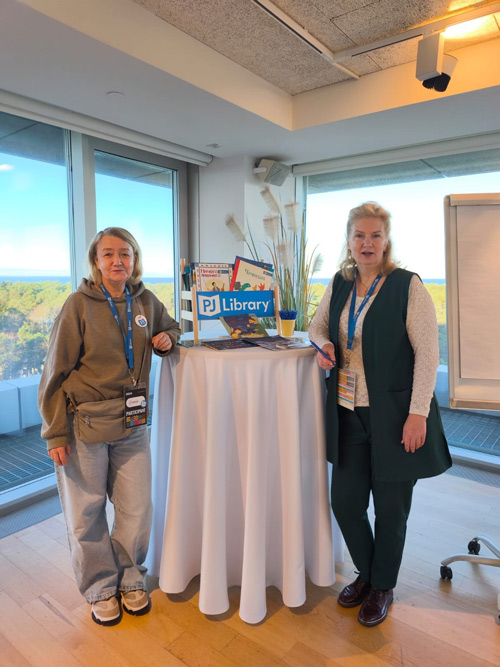
I brought these positive impressions with me as I traveled to the conference. Stepping into Gibush, the first thing I saw was the PJ Library display on the general registration table! PJ Library educators mixed with Latvian families on Friday night, both joining the opening session and communal dinner.
The next day, the PJ Library track began. Attendees and presenters traveled up to the tenth floor, where all around us, windows opened to the Baltic Sea. I was privileged to represent the Harold Grinspoon Foundation. I helped talked about where (or how) PJ Library in the Baltic states fits within the wider context of PJ Library internationally as the largest shared Jewish family experience in the world.
The day flew by. Child-development experts, schooled in PJ Library’s resources, ran workshops on “The Power of Play” and “How to Read with Children Using All the Senses.” Educators met in small groups and wove PJ themes into storytelling, theater, and art. PJ staff who coordinate Russian-language programs shared ways to expand engagement to reach families with older children. There was much laughter and a lot of shared learning.
The seminar ran for a total of a day and a half. At the end, we asked participants, “Why is PJ Library important in your community?”
They took their time responding, and there were many answers in many languages. But the words of one Latvian teacher summed up what many felt and what I had seen, visiting Riga and seeing the impact of PJ Library in the home and classroom. “When you introduce Judaism through PJ Library stories,” she wrote, “you delve into the traditions, culture, and history of our people. You help our children feel their authenticity.”
In other words, you help them feel at home.