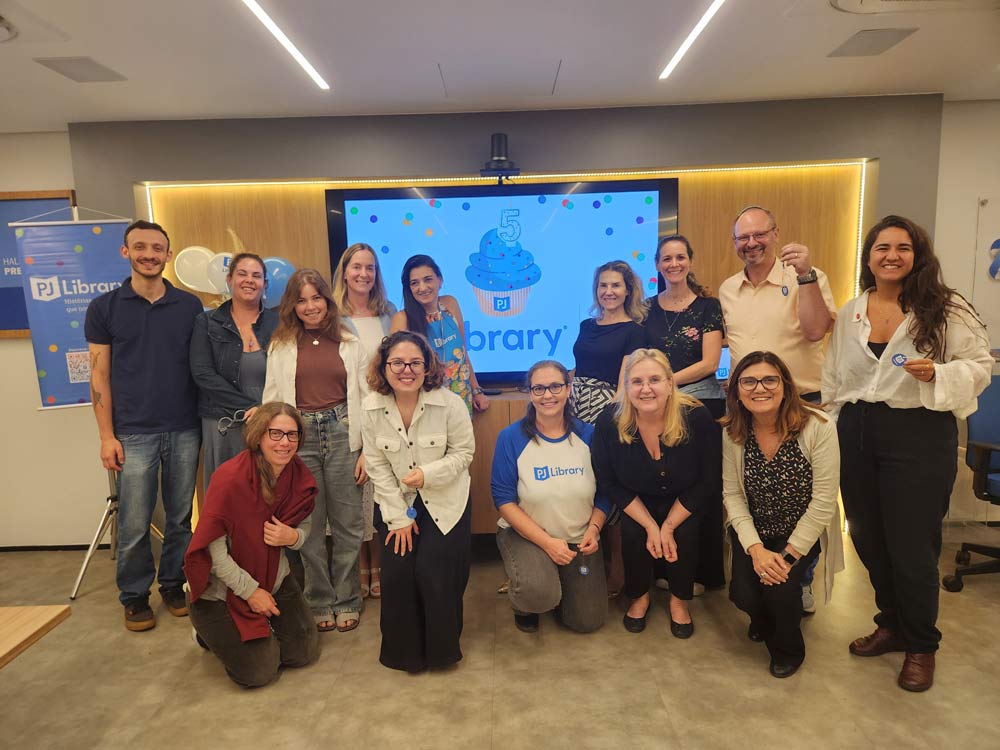
When PJ Library began in Brazil in 2020, there were approximately five Jewish titles for kids available for sale across the entire country. And these books were difficult to get ahold of— neither Judaica stores nor Jewish bookstores filled with shelves of Torah and Talmud sold Jewish books geared toward a younger audience.
Enter PJ Library. Over the course of a year, 24 Portuguese-language books about Jewish themes, values, and holidays were delivered straight to Jewish homes. Multiply that by five years, and the Brazilian Jewish community now boasts more than 120 Jewish kids’ books that speak to children across a diversity of religious practice, Jewish cultural background, and Brazilian geography.
“It’s a game changer,” says Karin Zingerevitz, PJ Library Director for Portuguese and Spanish. “This increase in books is something that was totally unthinkable. But now, alongside the thousands of kids getting books in their homes, 96 communities and organizations across Brazil receive a set of books per month. Schools, communities, synagogues, and youth movements use our books in every imaginable way—for school curriculum, childcare programming, and beyond. It went from kids’ books not even being on their radar to kids’ books being totally indispensable.”
Brazil is a large country, both in terms of size and population, but is home to only around 100,000 Jews concentrated in São Paulo, Rio de Janeiro and Porto Alegre. Approximately 20 to 30 percent of Brazilian Jews identity as Sephardi or Mizrahi, while the rest have Ashkenazi backgrounds. Across these geographies and identities, the Jewish community embraced PJ Library when it arrived in Brazil: 750 kids signed up in the first month. Five years in, PJ Library serves 3,500 subscribers out of a total estimated 5,500 eligible Jewish children under age 9 across all of Brazil. For many, the program helps foster a joyful Jewish identity alongside a Brazilian one.
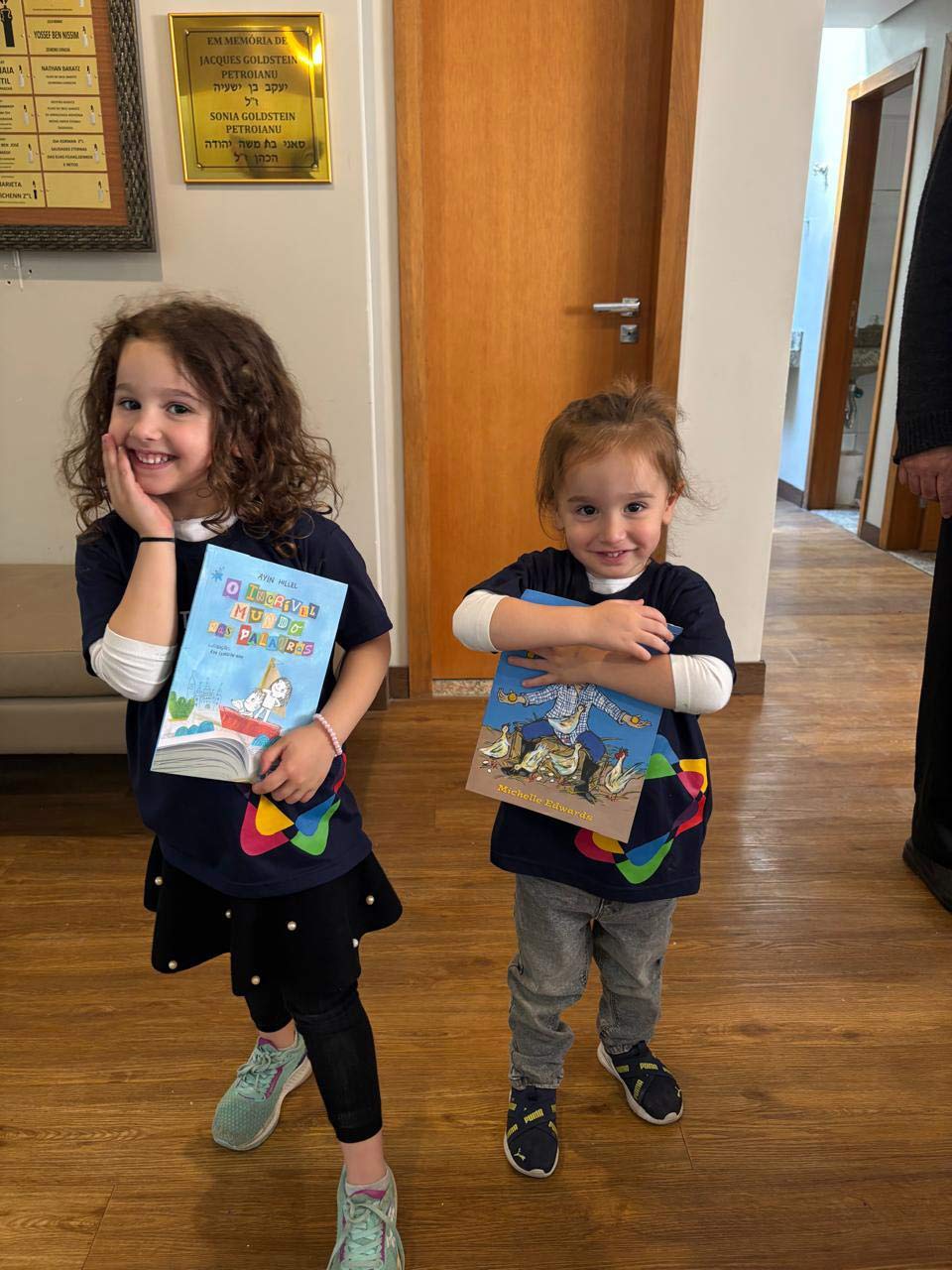
The books that are sent to Brazilian families are selected from either the US PJ Library lineup or the Israeli Sifriyat Pijama lineup and are then translated into Portuguese for use across Brazil and Portugal. Both lineups prove useful: The American lineup teaches more about Jewish holidays, rituals, and practices, while the Sifriyat Pijama lineup offers very accessible Hebrew and helps reinforce a connection to Israel. Some universal favorites include the Engineer Ari series, folklore from Chelm, and a Passover story from Ethiopia.
Zingerevitz also notes that PJ Library’s books and resources are especially helpful to parents and communal lay leaders, who often don’t have significant formal Jewish education. PJ Library books in Brazil come with support materials, including youth group activities, classroom curriculum, and ways to use the books alongside the larger community. And as in every other country, the books also come with helpful copy on the book flaps that enhances the Jewish content within the story.
“The flap copy is an important resource that gives parents and caretakers the tools to have a deeper conversation and engage more with the Jewish topic in the book,” says Alisa Koyrakh, Director of Books, PJ Library. “This additional context gives some parents more confidence and allows families to learn together. The books become springboards for more conversations about Judaism and values and offer activities that families can do together.”
This added context is especially needed in Brazil, where the books have become a staple in Jewish education in the regionally disparate community. Family-based Jewish education is a primary avenue into Jewish life, so helping parents and educators understand the use of books as tools is fundamental. “The community never thought about using books to educate about Judaism, even among adults,” adds Zingerevitz. “I hope that this generation growing up with quality books for kids will also grow up demanding quality Jewish books as they become adults.
“The biggest complaint we hear is that sometimes the books arrive late,” she jokes. “We love getting complaints like this. Obviously, we don't love that the post office is not working well, but we love that people are expecting our books. It’s become part of their routine. In just five years, it’s become part of their life.”